
Nalaquq: A Different Land

by Joshua Albeza Branstetter
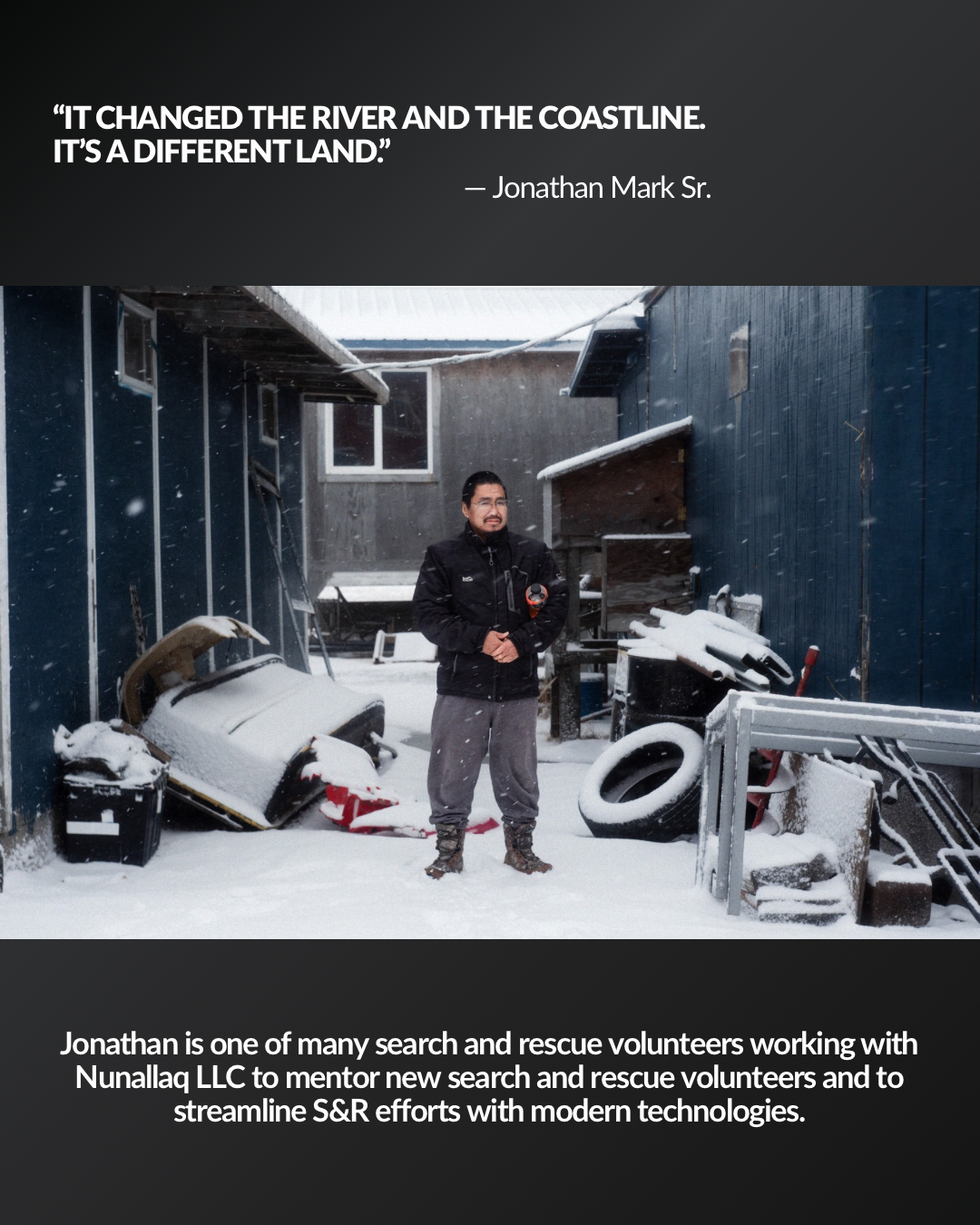
“It changed the river and the coastline. It’s a different land.”
Jonathan Mark, 39, has lived in Quinhagak, Alaska his whole life.
Jonathan is one of many search and rescue volunteers who have provided search and rescue services to his community for years now. Due to rising temperatures and significant erosion, that mission has become more dangerous. Jonathan recalls being trapped in the middle of a blizzard for three days, trying to navigate his way back home.

“Every time you need to figure out where north is you’d dig in the snow to see the grass. Because when winter comes, the first winds always blow north, so the grass freezes pointing north. But it’s different now. That freezing wind doesn’t always blow north.”
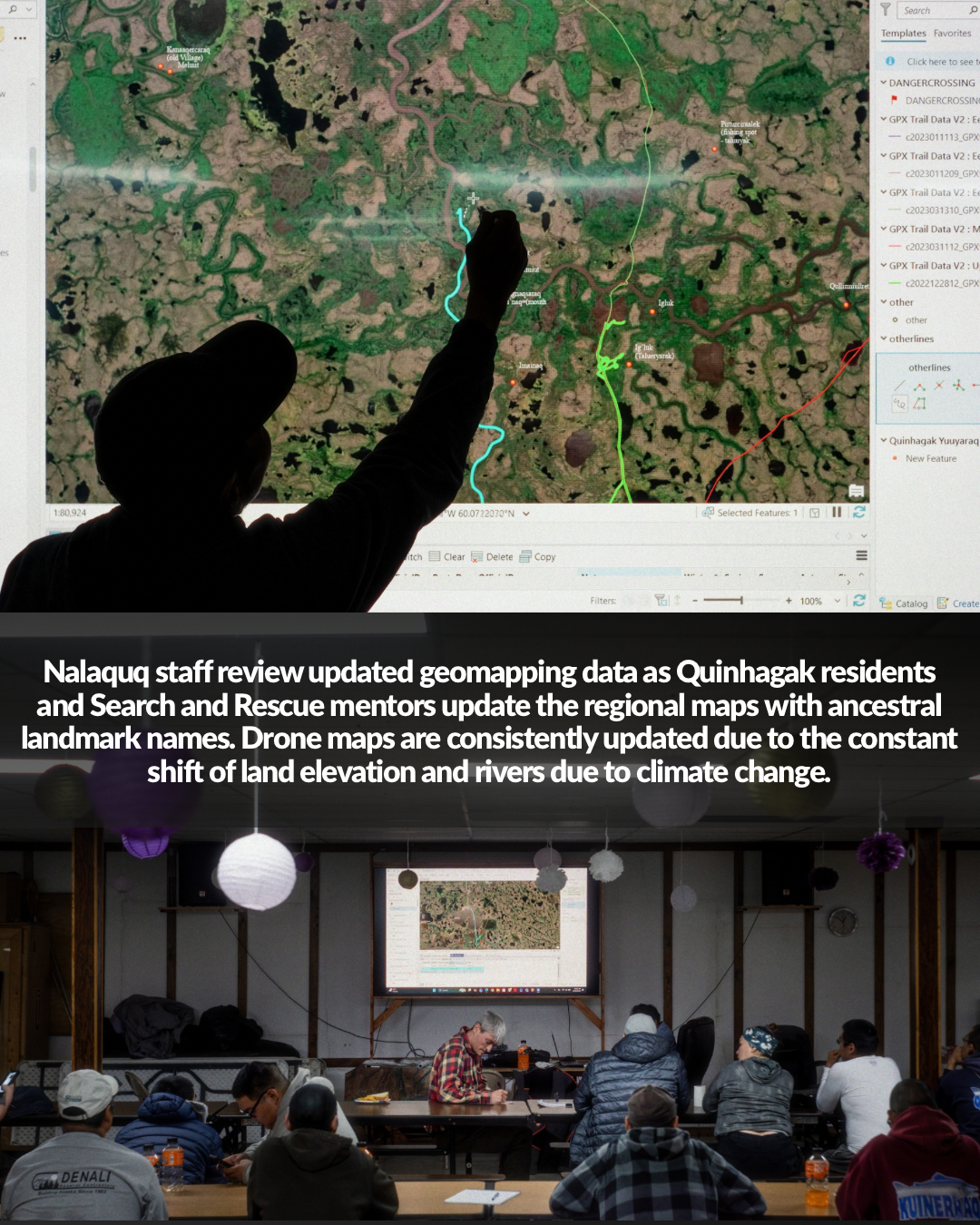
With the growing threat of disaster from climate change in the southwestern region of Alaska from coastal erosion, typhoons, and winter storms, the need for volunteers like Jonathan has grown but the availability of search and rescue personnel and resources hasn’t.

Historically, search and rescue volunteer teams have been responsible for providing their own rescue supplies and requesting fuel from local entities, a process that could take hours and often required volunteers to personally absorb the associated costs. The system also relied on ad hoc recruitment efforts and piecemeal acquisition of supplies.

Following Typhoon Halong, Lynn Marie Church, CEO of Nalaquq, LLC, and Warren Jones, CEO of Qanirtuuq, Inc. and Chairman of Quinhagak Search and Rescue, Inc., a volunteer search and rescue responder for more than 30 years, worked alongside volunteers to raise funds for operational go-bag kits, train new rescue personnel, and streamline the process.
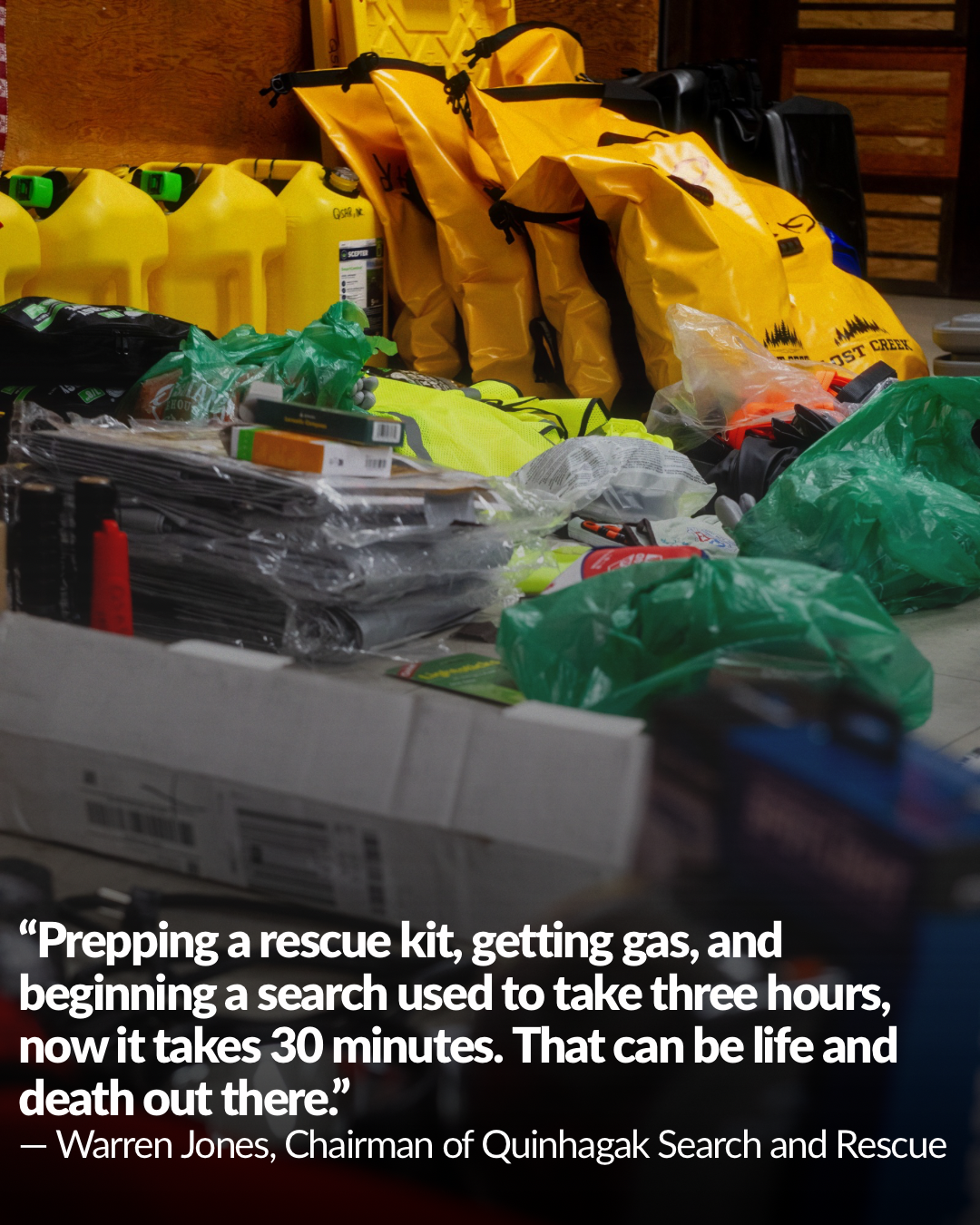
“Prepping a rescue kit, getting gas, and beginning a search used to take three hours. Now it takes 30 minutes. That can be life and death out there,” says Warren Jones.
Following Typhoon Halong, Lynn Marie Church, CEO of Nalaquq, LLC, and Warren Jones, CEO of Qanirtuuq, Inc. and Chairman of Quinhagak Search and Rescue, Inc., a volunteer search and rescue responder for more than 30 years, worked alongside volunteers to raise funds for operational go-bag kits, train new rescue personnel, and streamline the process.
“Prepping a rescue kit, getting gas, and beginning a search used to take three hours. Now it takes 30 minutes. That can be life and death out there,” says Warren Jones.
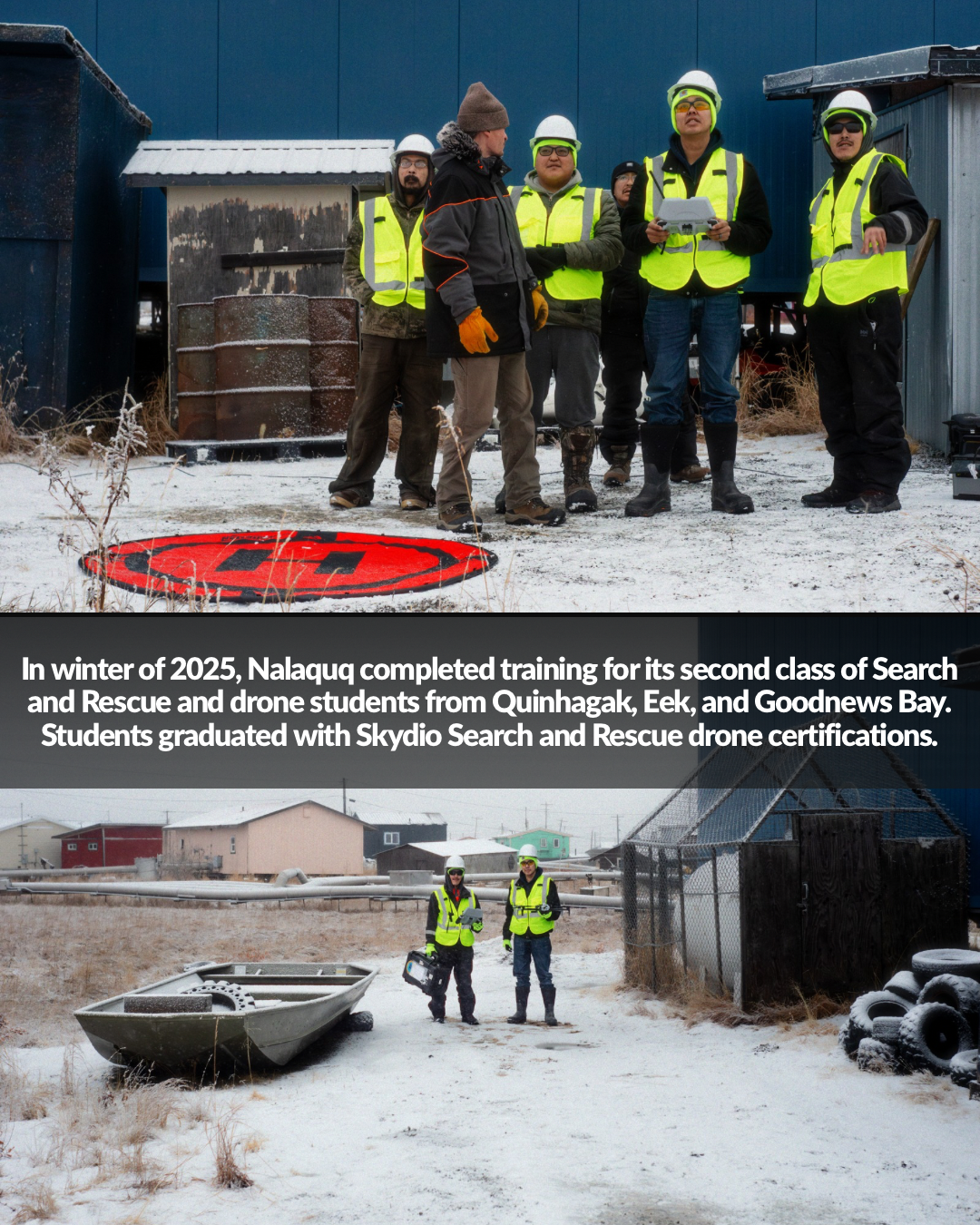
In the winter of 2025, Nalaquq completed training for its second class of Search and Rescue and drone students from Quinhagak, Eek, and Goodnews Bay. Students graduated with Skydio Search and Rescue and drone certifications. Through support from the Alaska Venture Fund, the newly formed Quinhagak Search and Rescue, Inc. successfully acquired its first grant, and drone kits were provided to each community through the Alaska Department of Transportation Scalable Operations and Advanced Remote Technologies (SOAR) Initiative Grant program.
“The community-based training model works because we are training our people in their environment, where they know weather, ocean and river waterways, and land more than anyone else.” says Lynn.
Lynn hopes Nalaquq, LLC and QSAR, Inc. will continue to gain support, and create economic opportunities within the region.
“When the Community Development Quota (CDQ) shut down fishing three seasons ago, it hit the economy hard. Half of everyone in Quinhagak works in the fishing industry.”
For Patrick Jones, a recent graduate of Nalaquq’s S&R and Drone certification programs, he sees the program as a new career path.
“There’s hardly any jobs here. I like Nalaquq. The program just started, but I like it.”

Summer 2026, Nalaquq, in partnership with Qanirtuuq, Inc. (QINC), Quinhagak Search and Rescue, Inc. (QSAR, Inc.), Yukon-Kuskokwim Health Corporation (YKHC), Alaska Department of Transportation (ADOT) SOAR Initiative, and YKHC EMS, will lead Emergency Trauma Technician (ETT) training and mock rescue mission exercises for QSAR, Inc. volunteers.

Dr. Sean Gleason, Nalaquq, LLC Research and Development, will also be leading Skydio Drone courses for Woodwell Climate Research Tribal Liaisons from Kwigillingok, Chevak, Nunapitchuk, Kwethluk, Kipnuk, and Quinhagak. A second session will include students from St. Mary’s, Yukon River Drainage Fisheries Association, Mekoryuk, Nuniwarmiut Reindeer and Seafood Apprentice Program, and local KWN youth.

“We are getting our people certified with our partnerships, training our people, we’re creating new jobs, and saving the state money.” says Lynn. “We can do the same work outside contractors do, and for a fraction of the cost for the state.”
For volunteers like Jonathan Mark, now training the next generation of search and rescue experts, he hopes the inclusion of new technology will help search and rescue adapt to climate change.
“It’s a better system, and it could save lives.”

To learn more about Nalaquq’s work, Quinhagak’s search and rescue volunteers, and to support, follow @nalaquq on instagram or visit www.nalaquq.com . Links in the bio.

Update: The Independent Fishermen of Quinhagak Cooperative (IFQC) with the support of the CDQ has announced fishing will reopen in Quinhagak in 2026.

photos by: Joshua Albeza Branstetter